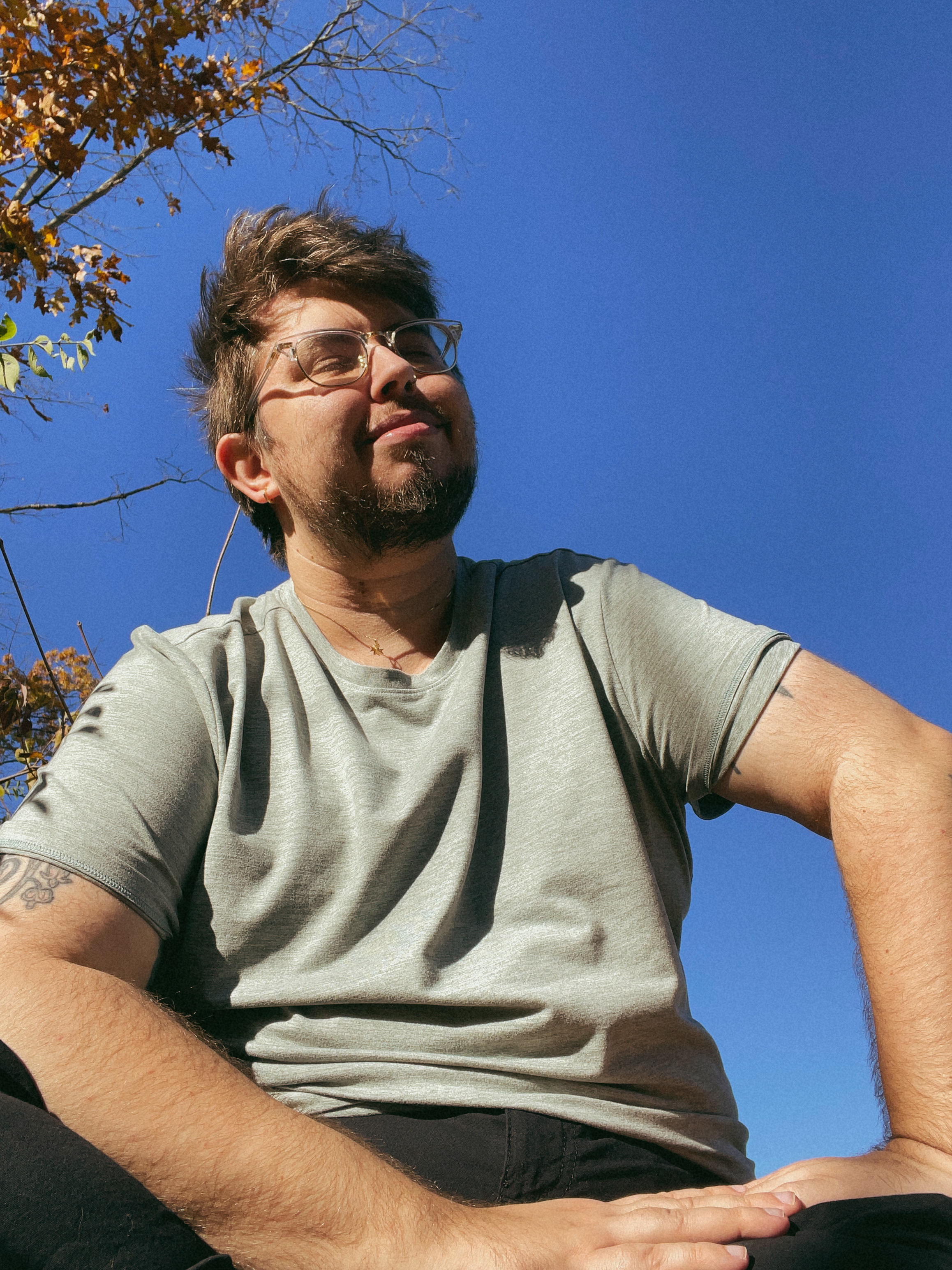
Sam Dylan Finch is a writer and coach working at the intersection of Culture, Wellness, & digital media.

He has the brains of a social scientist, the heart of a poet, and a beloved community that spans the globe.
Since launching his blog, Let’s Queer Things Up!, in 2014, Sam has had an outsized impact on the collective conversation around queerness, the body, mental health, and social change, reaching over 12 million readers worldwide.
Sam utilizes storytelling, humor, and education to invite self-reflection and personal growth. While his work has largely focused on mental health, he’s been known to dabble in pop culture, service journalism, poetry, and personal essays as well.
Sam’s work has been translated into multiple languages and has been cited in academic research, textbooks, and college curriculum across queer theory, feminist studies, psychology, sociology, philosophy, and more.
He has been featured in Huffington Post, Vox, Teen Vogue, ABC News, Healthline, New York Times, Daily Beast, CNN, MSN, Yahoo!, Seventeen Magazine, Good Morning America, and many more.
Sam currently works as a freelance writer and content strategist. He also recently launched a blog on intentional living called Idle Hours, which he manages alongside his Instagram.
Need a Writer, speaker, or coach?
Say hello!


“He is a ray of light. Not sunshine — Sam’s light is more complicated than that. It comes from somewhere else, somewhere that is delicate and ferocious and vulnerable and courageous all at once.“
—JENNI BERRETT, author
newly published
I believe in love again (I think)

“Almost losing my life reminded me of just how much I loved it. And grieving Sean reminded me of the version of myself he called forward by loving me with conviction,” from Idle Hours
I can only tell you what I did

“I know that what I’m saying won’t keep her safe — I can’t keep her safe — but as an uncle, I just want to keep her soft for as long as I can,” from Let’s Queer Things Up!
ADHD AND Anxiety: the Overlap

“Your manager asks if you’ve got time to meet this afternoon. One surprise meeting on the calendar, and now you’re spiraling,” from Project Healthy Minds
Latest on Instagram


